.png)


H is for Hawk. G is for grief. M is for melancholy. S is for sadness. W is for woe. D is for dejection. And, of course, C is for cookie. Based on Helen Macdonald’s best-selling memoir of the same name, H Is for Hawk runs down the alphabet of emotional turmoil, spelling out each word in capital letters. It’s one of those books whose specificity can be richly extrapolated into universality, the language of the page finding the words that we’ve all come to experience through loss. But as a film, specifically this one directed by Philippa Lowthorpe, everything seems to have been funnelled into mining the same emotional beats that we’ve come to expect.
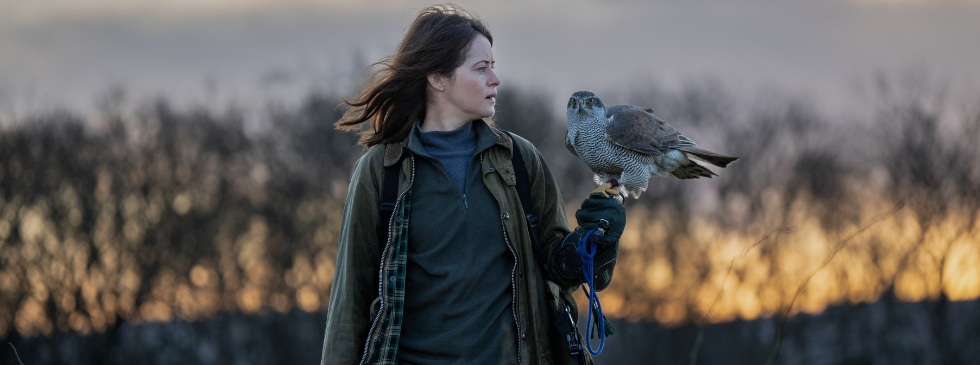
When we first meet Helen (Claire Foy), she’s enraptured by the majesty of two hawks gliding through the air. Their perfectly outstretched wings make them rise and fall against the pale blue sky, the flapping of wings being the only sound within the tranquil field. Following in her dad’s (Brendan Gleeson) footsteps, Helen's younger years saw her become a proficient falconer. A move to London for a professorship shut down that passion for a while. The urban jungle still treats her well, taking her class to the pub instead of the stodgy Cambridge lecture halls.
Helen rang her father when she saw those hawks, a quick opportunity to reminisce about how they used to travel the countryside, appreciating its natural beauty. That would be the final words she would share with him, as the next phone call she receives is from her mother telling her that her father suffered a fatal heart attack. Hawthorpe renders this reveal through intense claustrophobia, pushing the camera onto Helen’s face as she slowly hangs up the phone and falls into her own arms. She goes to dinner with her best friend, Christina (Denise Gough, a consistently pleasant presence throughout this gloomy film), the air thick with silence.
The dead seem to come alive more often once they’re underground. That phone call is the only time we see Gleeson’s character alive; the rest of his scenes come from a rush of flashbacks that Helen can’t shake. He’s buoyant, refusing to retire. There’s passion in his refusal to quit, but also a sense of fear in that he doesn’t know what will happen once he stops moving. Helen ceases altogether under the grief, eventually adopting a goshawk, the most aggressive species of hawk, as a distraction.

Hawks can’t perceive what they don’t see, which is how Helen deals with her emotions. Burying them deep down, she becomes a sort of wild animal to her friends and family. Foy brings determination to her role, a blank stare becoming her perpetual costume. She has an attention-grabbing presence, which becomes the film’s main asset as it can barely string together the scraps of its story. Timelines become fragmented, clichés become repetitive, and everything is drawn way past its full potential. We’ve come to diagnose Helen’s depression ninety minutes before she does, making this whole thing feel like a spinning wheel in a rut.
Along with Tuesday and The Thing with Feathers, H Is for Hawk joins a recent trend of people using birds to aid them in their journey of accepting death. Unlike those initial two films, the bird featured in this one does not talk, only squaking every once in a while as it gets fed pieces of raw meat. That realism gives Foy the entire spotlight, but it also leaves her alone to carry such a blank film.
Roadside Attractions will release H Is for Hawk in theaters nationwide on January 23rd.
A Talent for Murder
.png)
October 21, 2026
By:
Hunter Friesen
Wildwood
October 22, 2026
By:
Hunter Friesen
Fjord
.png)
October 23, 2026
By:
Hunter Friesen
Klara and the Sun
.png)